
High-performance CrossFit: improve your WOD, strength and conditioning without going all out every day
Strength, power, aerobic fitness and strategy need to work together. A guide with practical sessions, recovery, weekly planning and a four-week progression.
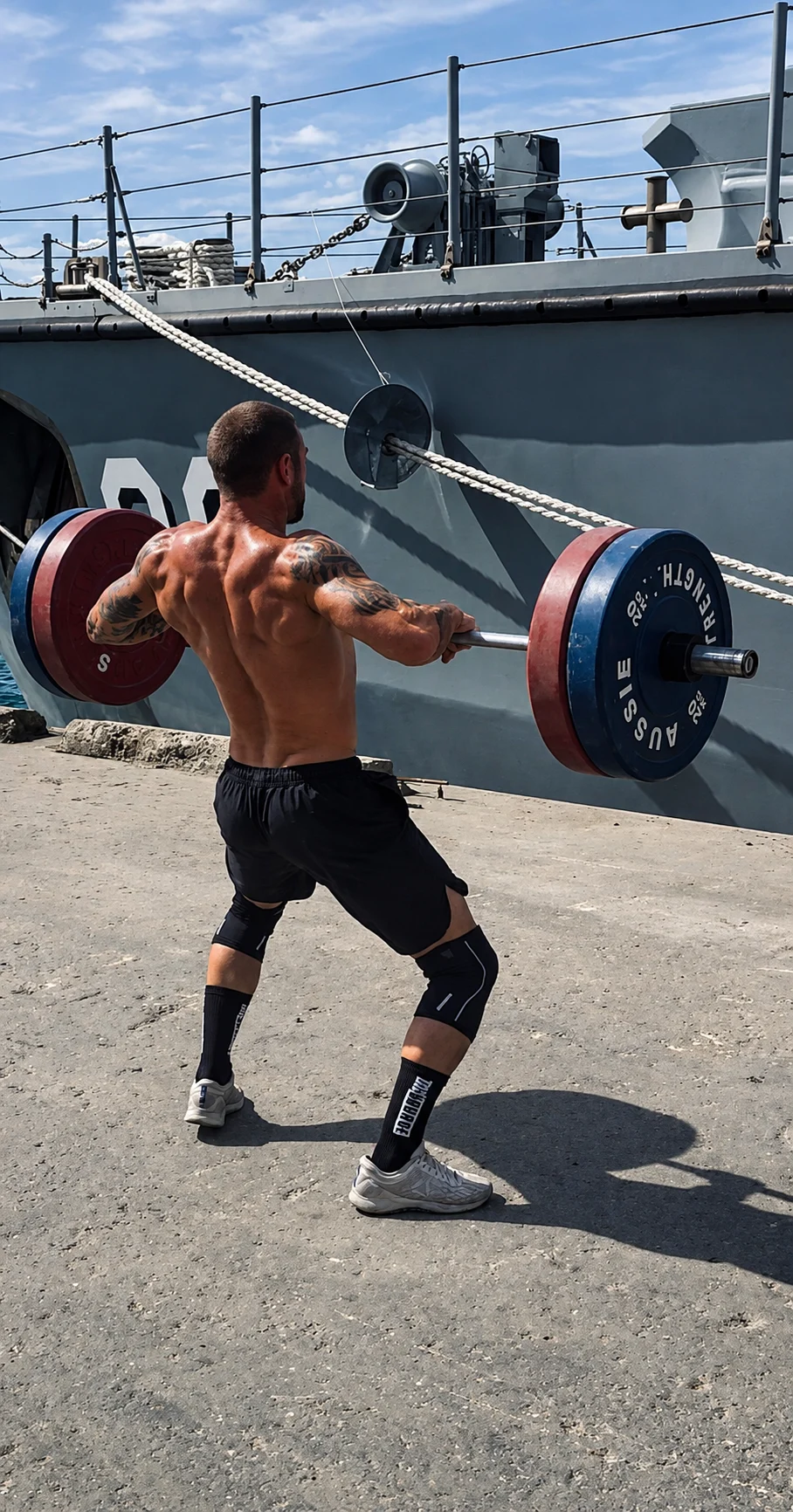
Two athletes train five times a week. One turns every session into a competition; the other balances strength, skill, conditioning and recovery. Training more exhausted does not guarantee greater progress. The goal is to develop the capacities that limit performance and learn to use them during the WOD — the workout of the day.
1. What determines performance?
Relative strength, power, aerobic capacity, local endurance, skill, mobility and pacing contribute differently depending on movements and duration. A review of 68 studies found that responses vary across WODs. Another review, covering 19 studies and 537 participants, highlights the need to consider strength, power and execution together. No single number explains all performance.[2][5]
A 2025 meta-analysis of 19 studies and 911 participants found benefits of high-intensity functional training for several fitness components. This does not prove that any circuit is optimal: HIFT is a broad category, not a synonym for all CrossFit programming. Exercise selection and progression still matter.[1]
2. Not every WOD needs an all-out start
In 13 male regional competitors, starting Fight Gone Bad with controlled effort reduced first-round repetitions but increased repetitions in the next two rounds compared with an all-out start. This is a small, specific study, not a rule for every WOD. Very short tasks may justify an early acceleration; longer tasks place greater emphasis on distributing effort.[4]
| Approximate duration | What to watch out for |
|---|---|
| 1–3 min | Power and quality at high effort |
| 4–8 min | Intensity that still allows sustained work |
| 10–20 min | Pacing, breaks and local endurance |
| 20–40 min | Movement efficiency and effort distribution |
| >40 min | Energy, pacing and prolonged fatigue |
The table is educational guidance, not a physiological classification. Load, complexity and experience change the demands: five minutes of cycling is not equivalent to five minutes of Olympic lifting.
3. Fatigue is not an adaptation score
Heavy breathing, burning muscles and slower movement show effort but do not demonstrate the most efficient stimulus. Jumping after an exhausting circuit trains a different situation from jumping fresh to develop power. For strength, preserve load and recovery; for power, speed; for endurance, the ability to repeat work. Set the priority before selecting the session.
4. Aerobic fitness: a 35-minute session
Comfortable cycling or rowing develops endurance with less technical demand than many circuits. The aerobic system also contributes to recovery between intense efforts. For people who already tolerate continuous exercise, this example can complement the week without replacing specific training.
| Step | Time | Effort |
|---|---|---|
| Warm-up | 5 min | Easy |
| Main work | 25 min | RPE 3–4/10; comfortable conversation |
| Cool-down | 5 min | Easy |
RPE means perceived exertion: 0 is rest and 10 is maximal effort. Adjust duration and intensity to your capacity. “Zone 2” depends on the model used; a watch zone does not precisely identify a physiological threshold. Conversation and perceived effort are practical references, not laboratory tests.
5. HIIT: controlled two-minute intervals
| Step | Prescription |
|---|---|
| Warm-up | 10 min easy cycling |
| Intervals | 6 × 2 min; RPE 7–8/10 |
| Recovery | 5 × 2 min easy between intervals |
| Cool-down | 8 min easy |
Total: 40 minutes, including five recoveries between six efforts. An intermediate example; start with fewer repetitions if needed. These are not maximal sprints: aim to sustain output. If technique or performance collapses, reduce intensity or stop. Cycling makes it easier to control the cardiovascular stimulus without a complex skill becoming the first limitation.
6. Strength: purposeful sets and enough rest
Developing strength only through circuits can leave gaps. High repetitions under fatigue require different loads from a dedicated session. For an intermediate athlete with established technique, this example prioritizes strength without requiring failure on every set. Use a general warm-up and lighter preparation sets before working loads.
| Exercise | Sets × repetitions | Rest |
|---|---|---|
| Squat | 4 × 4–6 | 2–3 min |
| Romanian deadlift | 3 × 6–8 | 2 min |
| Split squat | 2 × 8 per leg | 90 s |
| Row | 3 × 8–10 | 90 s |
Choose loads that preserve execution and leave some repetitions available. A 2026 review of 17 meta-analyses found that combining strength and endurance can improve both capacities. Compared with strength training alone, average strength, power and hypertrophy outcomes were similar, with additional aerobic benefit. This does not remove the need to manage fatigue; elite-athlete data remain scarce.[3]
7. Power: quality before quantity
| Exercise | Sets × repetitions | Recovery |
|---|---|---|
| Vertical jump | 3 × 3 | 90–120 s |
| Medicine ball throw | 3 × 4 | 90 s |
| Kettlebell swing | 3 × 6 | 90–120 s |
Use only mastered movements, after warming up and before substantial fatigue. Move with explosive intent and controlled landings. A clear decline in speed or technique suggests ending the set or increasing recovery. This block is not a race against the clock; no universal percentage of speed loss applies to every exercise.

8. AMRAP, EMOM and For Time: format is not everything
| Format | How it works | Main consideration |
|---|---|---|
| AMRAP | As many rounds or repetitions as possible in a set time | Maintain technique and pace |
| EMOM | Start a task each minute | Leave recovery time within the minute |
| For Time | Complete set work as quickly as possible | Do not sacrifice execution for the clock |
Two twelve-minute AMRAPs can demand very different capacities. An EMOM that fills the entire minute offers almost no rest. Select load, repetitions and movements by the goal, not the acronym. Traditional sets with full rest also have a place for skill or strength practice.
9. Strategy: sets, transitions and pacing
If your maximum is fifteen push-ups, repeating twelve each round may lead to early failure. Splitting them into six plus six with a planned brief pause may preserve later work. Arrange equipment without blocking walkways and record round times. A shift from two to four minutes may reveal an aggressive start, local fatigue or movement complexity — not just poor cardio. Test pacing in comparable sessions.
10. Three sessions for different goals
| Session | Structure | Execution |
|---|---|---|
| A — Strength; 45–55 min | 10 min warm-up; squat 4 × 5; Romanian deadlift 3 × 6–8; row 3 × 8; plank 3 × 30 s; 5 min easy | Rest 2–3 min for squats, 2 min for deadlifts, 90 s for rows and 60 s for planks |
| B — Intervals; 40 min | Use the cycling session in section 5 | RPE 7–8/10; repeat sustainable efforts |
| C — AMRAP; 12 min | Per round: 8 rowing calories, 10 goblet squats and 8 push-ups | Warm up first; use manageable load and incline push-ups if needed |
In session C, start at a pace that allows transitions and short breaks without losing technique. Stay consistent through the middle and accelerate late only if execution remains sound. Rowing calories are an equipment metric, not a universal measure of energy expenditure. Twelve minutes refers only to the main block; allow time to warm up and cool down.
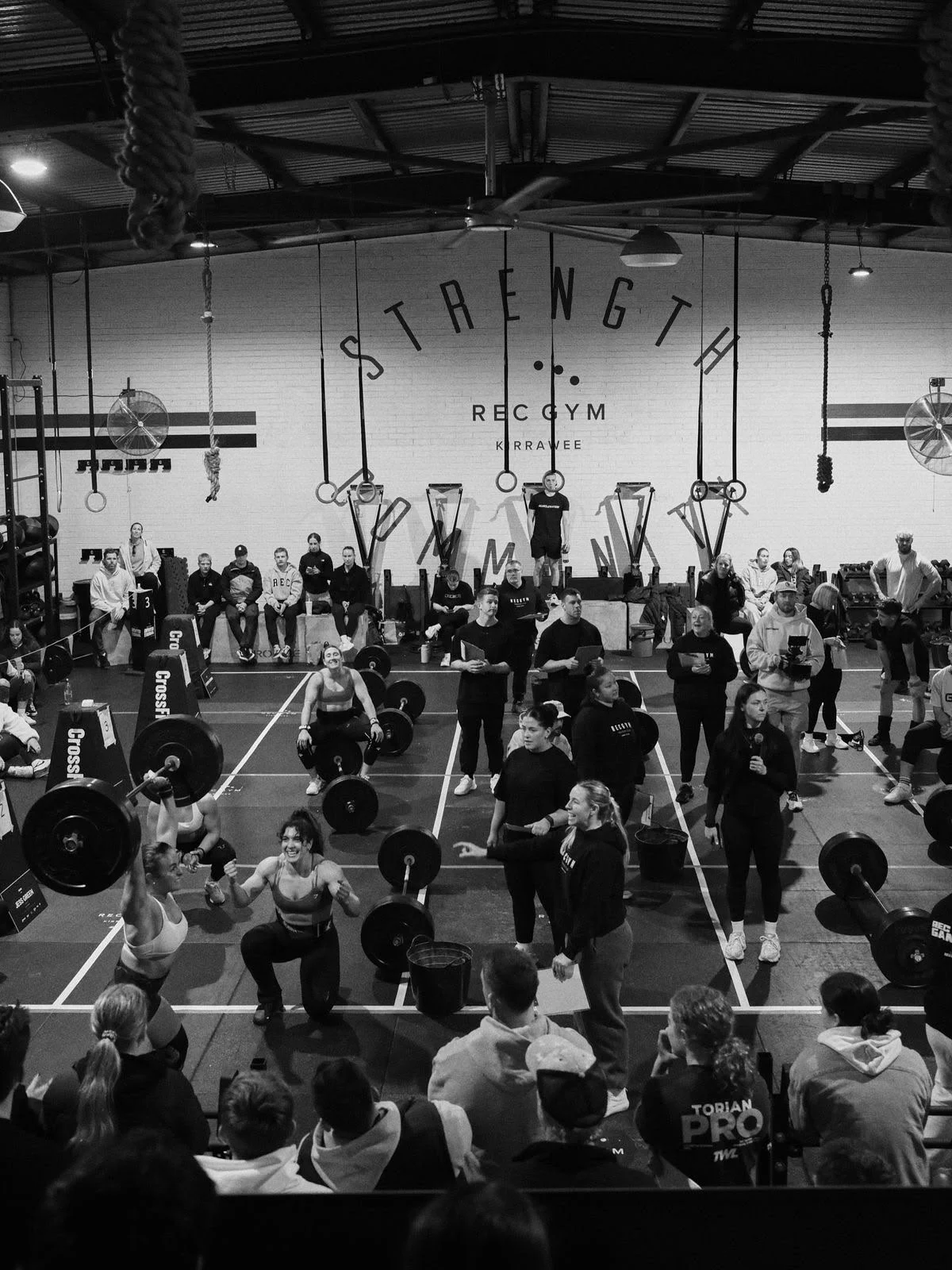
11. A week organized around priorities
| Day | Priority |
|---|---|
| Monday | Lower-body strength |
| Tuesday | Interval conditioning |
| Wednesday | Skill and gymnastics without turning it into a maximal test |
| Thursday | Rest; optional easy activity |
| Friday | Power and strength with adequate recovery |
| Saturday | Specific WOD and strategy |
| Sunday | Rest |
These are five illustrative sessions, not a required frequency. If you only have three days, one session can prioritize strength, another conditioning and another WOD integration, with recovery days between them when possible. Beginners may need less volume; competitors may need a different distribution. Your schedule and training response should determine adjustments.
12. Four-week progression
| Week | Focus |
|---|---|
| 1 | Record loads, repetitions, times and RPE |
| 2 | Repeat and improve consistency |
| 3 | Progress one variable if your response allows |
| 4 | Reassess and adjust recovery and demand |
The calendar does not require more load in week three or a reduction in week four. If four sets of five squats become consistent at the intended effort, consider a small increase. For intervals, change intensity or duration, not everything together. Compare WODs with similar loads, movements and conditions. More work with poorer execution is not automatically progress.
13. Recovery: look at the whole picture
The 2024 review described challenges where certain markers took 48–72 hours to recover. This does not require two or three rest days after every WOD. Duration, movements, experience and the marker measured change the response. Consider sleep, readiness, pain, warm-up and performance in similar sessions. A persistent decline calls for adjustment, not automatically more intensity.[2]
14. Safety, technique and skill progression
A review of 25 studies and 12,079 participants found variable injury rates, with shoulders, spine and knees commonly affected. Differences in definitions and methods limit comparisons between sports. Neither declaring every session safe nor condemning the whole sport is justified. Match difficulty to your history and learn advanced movements with coaching before adding fatigue.[6]
Reduce the load or change the variation when control deteriorates. Severe pain, dizziness or unusual symptoms call for stopping and assessment. Very severe muscle pain with marked weakness or dark urine after exercise requires urgent medical attention. Do not treat warning signs as proof of discipline.
15. Nutrition and tracking
Enough energy, carbohydrates matched to demand, adequate protein and hydration support training. This does not mean every short WOD requires supplements or sports drinks. Sleep, food availability and individual tolerance also matter. Record load, repetitions, duration, RPE, rest strategy and perceived recovery; compare trends instead of judging a week by one session.
16. Mistakes that hold back progress
Turning every workout into competition; chasing exhaustion; practicing skills only during WODs; copying professional training volume; increasing intensity when recovery worsens; changing everything before results can be compared. Variety is part of the sport, but some repetition is needed to know whether you are improving.
17. VETOR’s role and the limits of the evidence
VETOR aims to organize goals, history and progression in context. Training needs to fit your routine and the other weekly demands. Recording what you did and how you responded supports the next decision; it does not mean automatically measuring power, diagnosing fatigue or correcting technique. The system should support decisions and professional coaching.
There is no single periodization, perfect frequency or universal pacing strategy demonstrated for everyone. Many studies use small samples and different protocols; elite athletes are less represented. The workouts in this guide are editorial examples, not protocols proven superior. Apply principles, monitor your response and adjust purposefully.
VETOR — DON’T GUESS.
Your next WOD deserves purposeful preparation. Join the waitlist to follow VETOR.
References
- High-intensity functional training and fitnessWang et al. (2025) · BMC Public Health · 25:528
- Physical demands and physiological responses in CrossFitMartinho et al. (2024) · BMC Sports Science, Medicine and Rehabilitation · 16:196
- Concurrent training adaptationsHeld et al. (2026) · Sports Medicine · 56:1489–1512
- Fatigue and performance in pacing controlRibeiro et al. (2024) · Perceptual and Motor Skills · 131(4):1274–1290
- Biomechanical and physiological demands of CrossFitMalheiro et al. (2026) · Journal of Human Kinetics · 103:161–183
- CrossFit injuries: epidemiology and risk factorsRodríguez et al. (2022) · The Physician and Sportsmedicine · 50(1):3–10
Educational content for adults. Examples do not replace individual assessment and prescription by health and training professionals.