Joint mobility for high performance: range, control and strength without sacrificing power
How to train ankles, hips, trunk and shoulders for your sport: eight exercises, specific warm-ups, a 20-minute routine and a four-week progression.
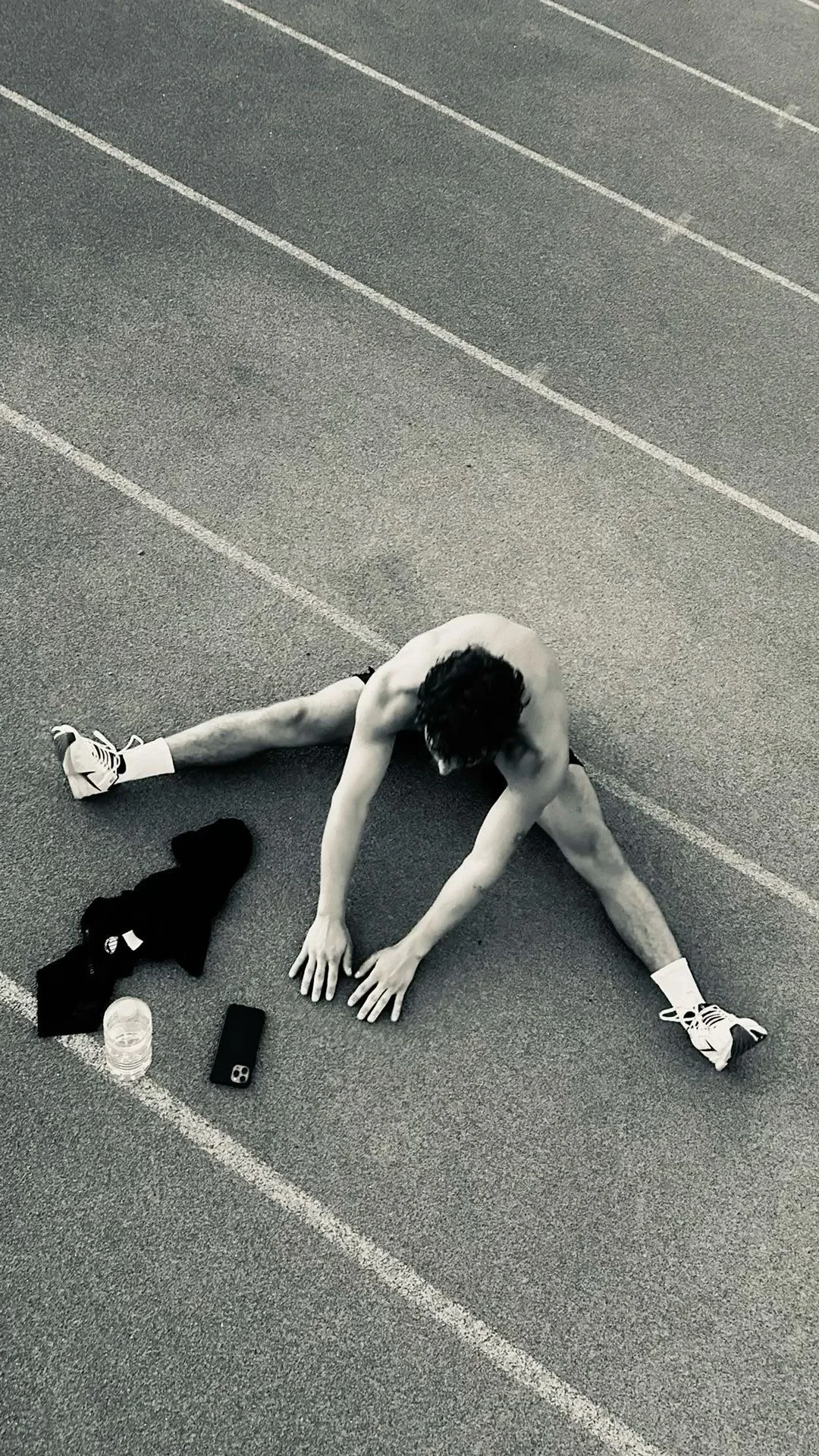
Two athletes try to squat. One gets very low while holding a support but loses balance and lifts the heels without assistance. The other reaches less depth yet controls the descent and load. Who has better mobility? It depends on the task. Passively accessing a position does not, by itself, demonstrate the ability to use it actively, produce force or repeat the movement well.
More stretching does not automatically mean better movement. Preparation should consider available range, control, strength and sporting demands. Resistance training can also improve flexibility: Favro and colleagues included 36 studies and 1,469 healthy adults, finding positive results but high heterogeneity and no study rated at low risk of bias. This opens possibilities without proving universal superiority over stretching.[2]
1. Flexibility, mobility and stability
Flexibility describes available range, often measured passively. In sports training, mobility is a functional term for accessing and controlling range, involving strength and coordination. Stability means managing positions and forces for the task, not keeping the body motionless. These capacities interact, but developing one does not guarantee equal improvements in the others.
| Capacity | Main question | Example |
|---|---|---|
| Flexibility | What range is available? | Passive leg raise |
| Mobility | What range can I actively use? | Active leg raise |
| Stability | Can I control position and force? | Controlled squat |
| Strength through range | Can I produce force in the required position? | Split squat through an appropriate range |
Skopal, Drinkwater and Behm reviewed 22 studies of methods such as dynamic warm-ups, yoga and Pilates in sporting populations. Twenty reported some benefit or maintenance of performance. Diverse protocols and variable quality prevent choosing one superior method for everyone. The useful question remains which capacity is missing for your task.[3]
2. More range is not always more performance
Gymnastics, running, swimming and jiu-jitsu require different positions. A runner without functional difficulty does not need an extreme hip split to improve pace; endurance, strength or consistency may deserve priority. A grappler struggling with a specific position may need targeted work. Sporting demands and individual anatomy guide the need, not an image of ideal range.
Hypermobility can mean a large range with a need for better control and load tolerance. It does not automatically imply disease or injury, or make aggressive stretching the priority. If range is already sufficient, building strength and coordination may be more useful than pursuing increasingly extreme positions.
3. Static or dynamic before training?
Static stretching holds a position; dynamic stretching repeats controlled movements. A 2024 meta-analysis included 16 studies: both improved range. Individual effects on vertical jump were not significant, although comparison between methods favored dynamic stretching. Another 2024 review found useful applications for dynamic stretching before explosive tasks, with methodological limitations. These findings do not justify an absolute ban on static stretching.[4][6]
Before sprints, jumps or demanding loads, prioritize progressive, specific preparation. Long, intense static stretches immediately before maximal effort may not be the best choice; duration, intensity and the rest of the warm-up matter. If a region needs more range, static work can be placed elsewhere or followed by dynamic preparation and task-specific sets.
4. How much stretching: interpret dosage carefully
Ingram and colleagues analyzed 189 studies and 6,654 adults, published online in 2024 and in a 2025 issue. Average flexibility gains leveled off near 4 min accumulated per session for acute effects and 10 min weekly for chronic effects, for the targets and outcomes studied. This is not a ten-minute whole-body dose, a mandatory minimum or a rigid individual limit.[1]
One starting option is moderate tension for 20–40 s without sharp pain, repeated as needed. For the calf, for example: 2 × 30 s per side on 2–3 days weekly. Adjust to response rather than an obligation to accumulate time. If the goal is to use range in a squat, add active control and strength in suitable positions.
5. Strength training can also develop range
Alizadeh and colleagues’ 2023 review included 55 studies and found increased range after resistance training. Available comparisons found no significant difference versus stretching. This does not establish equivalence for every exercise or population; findings for bodyweight-only training were less clear. Appropriate external load, control and progression can develop strength and range together.[5]
Split squats and squats train controlled range according to anatomy and goals. Romanian deadlifts build posterior-chain strength but should not become attempts to force extreme stretching. Those already training through suitable ranges may need less complementary work. Choose mobility that addresses a real need instead of duplicating stimuli out of obligation.
6. Ankles: mobilizing and strengthening are different tasks
Exercise 1 — Knee-to-wall
Facing a wall, move the knee toward it while keeping the heel grounded. Return slowly and adjust foot distance without forcing. The aim is active dorsiflexion; reduce range if the heel rises or notable discomfort occurs. The level-based options below illustrate organization rather than clinically validated doses.
| Option | Work per side |
|---|---|
| Starting | 2 × 6 controlled repetitions |
| Intermediate | 2 × 10 repetitions |
| More demanding | 3 × 8 repetitions; 2 s hold at end range |
Exercise 2 — Calf raise
With stable support, raise the heels and lower slowly. Start on the floor if needed; on a step, lower only through a tolerable range without forcing the Achilles tendon. If already tolerated, 2–3 sets of 8–12 repetitions are a starting example, resting 45–90 s according to effort. This strengthens plantar flexors but does not automatically replace targeted dorsiflexion work.
7. Hips: rotation, range and single-leg strength
The hip contributes to flexion, extension, abduction, adduction and rotation. Jiu-jitsu, strength training and running use these capacities differently. A routine should respond to the sport and person rather than demand that everyone spread the legs further. Start with comfortable positions, support when needed and enough control to repeat without pain.
Exercise 3 — 90/90 transitions
Seated, arrange the legs at roughly 90 degrees and move the knees slowly from one side to the other. Use the hands for support and control the trunk. Here, moving from one side to the other is one transition; returning is another repetition. Do not force the knees onto the floor. Reduce range or choose a more comfortable position if needed.
| Option | Transition prescription |
|---|---|
| Starting | 2 × 5, with hand support |
| Intermediate | 2 × 8, controlled |
| More demanding | 3 × 6, reducing support when possible |
Exercise 4 — Adductor rockback
From all fours, extend one leg sideways with comfortable foot support. Move the hips slowly backward and return without seeking groin pain. One example is 2 sets of 6–10 repetitions per side. Rest 20–40 s or longer as needed for control; mobilizing need not become a test of discomfort tolerance.
Exercise 5 — Controlled split squat
With one foot forward and one behind, bend the knees slowly and return. Start with bodyweight and stable support if needed. Try 2–3 sets of 6–8 repetitions per leg, resting 45–90 s according to effort. There is no mandatory depth: use controllable range and progress load only when execution allows.
8. Thoracic spine: controlled rotation
The trunk helps coordinate ribs, shoulder blades and shoulders. Rotation and extension can matter in swimming and combat sports, but a better isolated test does not guarantee a better stroke or faster strike. Specific practice remains necessary, and an observed limitation alone is not evidence of dysfunction.
Exercise 6 — Quadruped thoracic rotation
On all fours, place one hand behind the head. Rotate the trunk, moving the elbow toward the ceiling, and return slowly. Stay comfortable and avoid forcing the lower back. Begin with less range rather than chasing maximum rotation at any cost. Options below are per side; recover as needed for controlled repetitions.
| Option | Work per side |
|---|---|
| Starting | 2 × 5 repetitions |
| Intermediate | 2 × 8 repetitions |
| More demanding | 3 × 8 repetitions; 2 s hold |
9. Shoulders: range supported by strength
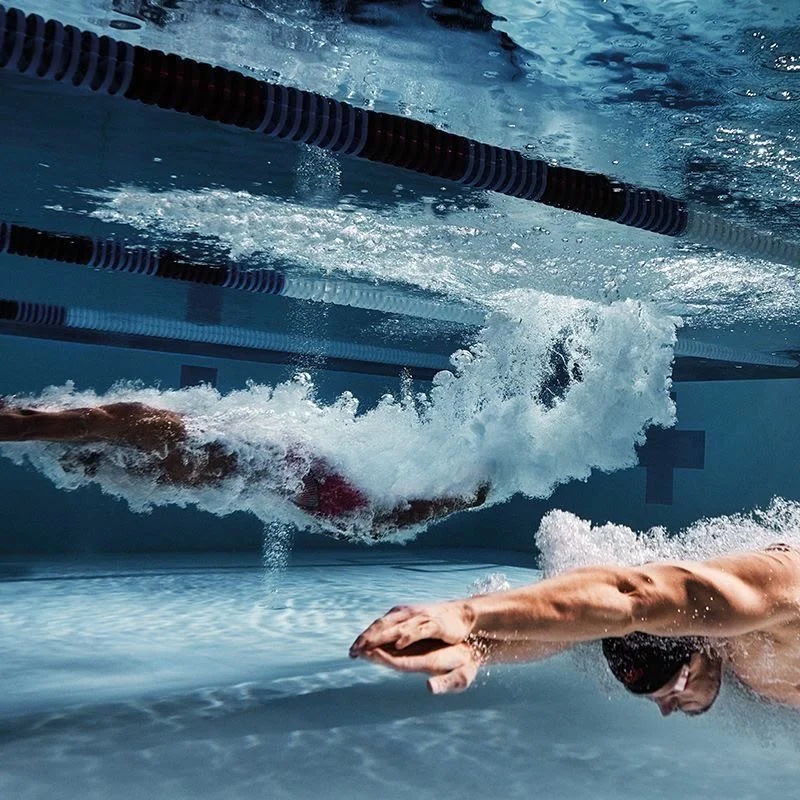
Swimming, overhead CrossFit movements, and pushing or pulling exercises require coordination, but not identical range from everyone. If you can already raise the arms but cannot control a load there, more flexibility may not solve the issue. Strength, technique and contextual assessment also matter.
Exercise 7 — Wall slide
Facing the wall, place the hands or forearms against it according to the variation and slide the arms up without excessive trunk compensation. Start with 2 sets of 8 repetitions, resting 20–40 s or longer if needed. Reduce height if uncomfortable and do not force a painful position.
Exercise 8 — Band external rotation
With the elbow near the trunk and a light band, perform controlled external rotation. An example is 2 sets of 10–15 repetitions per side, resting 30–60 s according to effort. Avoid twisting the trunk to overcome resistance. This is specific strength work, not only range work; choose a band that allows consistent technique.
10. Warm up for the sport that follows
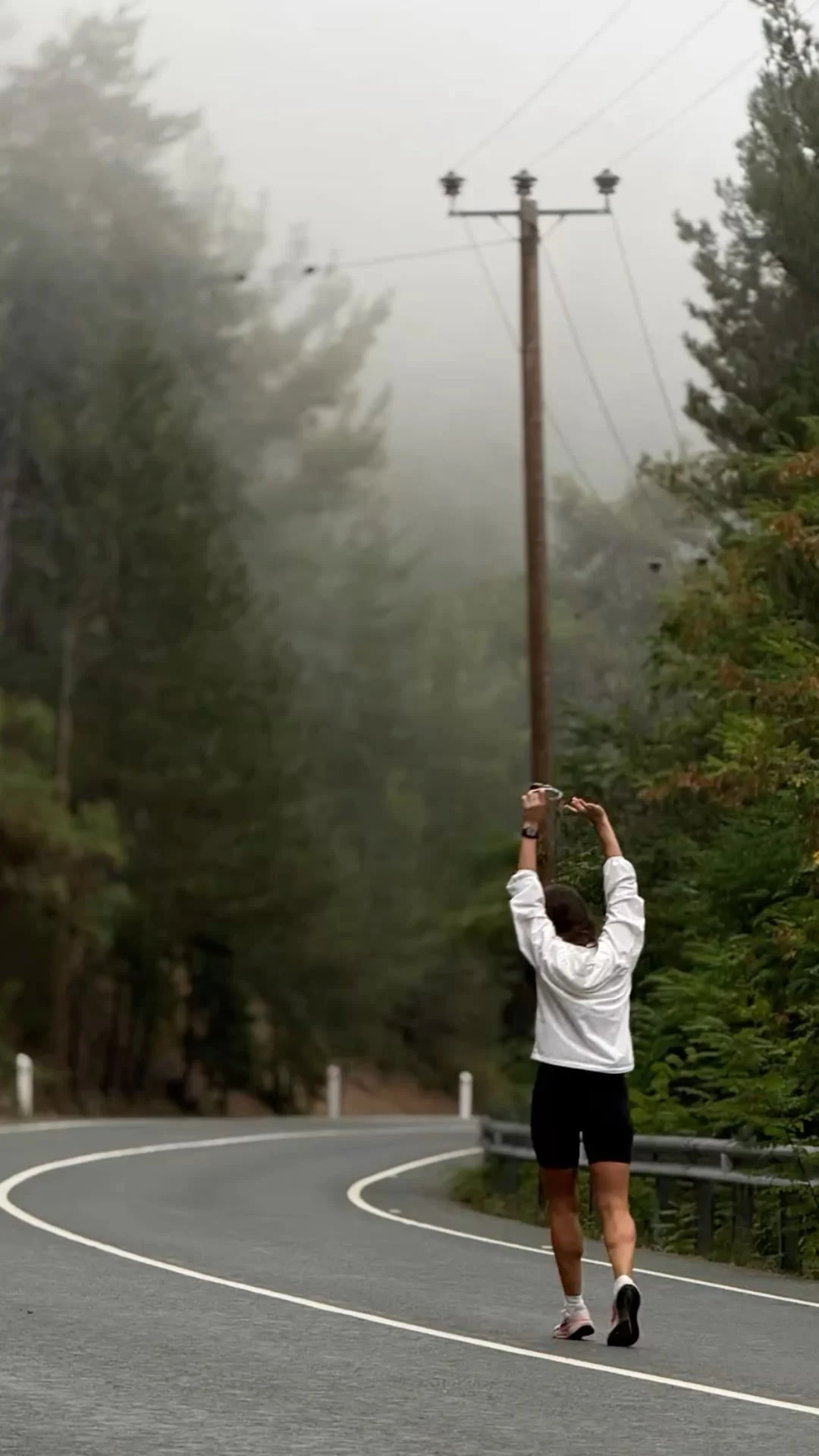
Combine progressive general movement, dynamic mobilization and specific preparation. Heavy squats still need lighter preparatory sets; progressive accelerations can prepare sprint speed. The photograph is illustrative: warm up somewhere safe, away from traffic. Table durations are examples, not identical requirements for everyone.
| Sport | Suggested preparation | Approximate duration |
|---|---|---|
| Running | Walk or jog; dynamic ankles and hips; progressive accelerations if appropriate | 8–12 min |
| Lower-body strength training | Easy movement; active dorsiflexion; progressive squats and preparatory sets | 8–12 min |
| Jiu-jitsu | General movement; 90/90 transitions; thoracic rotation; progressive technique | 8–12 min |
| Swimming | Dynamic shoulders and trunk; easy sets in the water | 8–12 min |
| CrossFit | Dynamic movements and session-specific sets | 10–15 min |
| Cycling | Progressive pedaling; complementary mobility when needed | 8–12 min |
11. A complementary session of about 20 minutes
For healthy adults, the session below can fit into 2–3 days weekly according to need and recovery. It is not a list to automatically add to every workout. Times include short rests and approximate transitions: use about 20–40 s between light sets as needed, extending if necessary. If an exercise becomes demanding, reduce sets or allow more session time; do not sacrifice control to beat the clock.
| Exercise | Work | Approximate time |
|---|---|---|
| Walking and general movement | 3 min | 3 min |
| Knee-to-wall | 2 × 8 per side | 3 min |
| 90/90 transitions | 2 × 6 transitions | 3 min |
| Adductor rockback | 2 × 8 per side | 3 min |
| Thoracic rotation | 2 × 6 per side | 3 min |
| Wall slide | 2 × 10 | 2 min |
| Controlled split squat | 2 × 6 per leg | 3 min |
| Approximate total | — | 20 min |
The routine uses one possible variation of each exercise, not every level-based option. External rotation and calf raises can fit elsewhere according to the goal rather than being mandatory additions. With only 10 min, select two or three relevant regions. Runners may prioritize ankles and hips; swimmers, shoulders and trunk; grapplers, sport-specific positions.
12. Four weeks to observe, practice and adjust
| Week | Goal | Strategy |
|---|---|---|
| 1 | Establish reference points | Learn execution and identify comfortable ranges |
| 2 | Build consistency | Repeat movements with control |
| 3 | Progress when appropriate | Adjust repetitions, range or resistance: one variable at a time |
| 4 | Reassess the need | Compare control and usefulness for the sport |
This is a practical framework, not a validated four-week protocol. In knee-to-wall, compare foot distance with the heel grounded under similar conditions. During hip transitions, observe assistance and control. Small visual changes do not necessarily demonstrate structural adaptation. Progress when execution is consistent and well tolerated; repeating the week may be the right choice.
13. Mobility is not an injury-proof guarantee
Injuries involve exposure, load, intensity, history, environment and other factors. Better range or a performance measure does not prove injury prevention. A runner stretching the calves or a grappler with mobile hips can still be injured. Integrate mobility, strength, technique and load management rather than promising complete protection from one exercise.
14. Seven common mistakes
- Stretching every joint in the same way without considering the sport.
- Interpreting every feeling of stiffness as muscle shortening.
- Forcing painful positions to gain range.
- Using only passive work when strength and control are also lacking.
- Turning light preparation into an exhausting session.
- Ignoring range work already present in strength training.
- Measuring progress only by the deepest position instead of the task.
15. VETOR’s role: organize with context
A runner and a jiu-jitsu practitioner do not need the same sequence. VETOR’s approach connects goals, sport, routine and progression while considering existing stimuli. In unilateral exercises, specifying work per side prevents assigning the entire dose to one limb. Duration, repetitions, sessions and perceived effort can support tracking when these features are available.
This does not mean the app automatically measures joint angles, diagnoses muscle shortening or identifies restrictions by camera without implemented, validated features. It should not turn every individual variation into a clinical problem either. Technology should help organize coherent training while respecting what the data actually support.
16. Scientific limits and practical decisions
There is no universal routine or ideal range determined only by height, weight and sport. Studies vary in samples, protocols and quality; average responses do not guarantee individual outcomes. More range does not automatically produce more speed, power or skill. Use research to select methods and the athlete’s response to adapt their application.
Prepare your movement with VETOR
Join the waitlist for VETOR updates and an approach to training connecting goals, context and progression.
References
- Ingram et al. · Optimising the Dose of Static Stretching to Improve Flexibility: A Systematic Review, Meta-analysis and Multivariate Meta-regression.Sports Medicine · 55:597–617 (2025; online 2024) · 10.1007/s40279-024-02143-9
- Favro et al. · The Influence of Resistance Training on Joint Flexibility in Healthy Adults: A Systematic Review, Meta-analysis, and Meta-regression.Journal of Strength and Conditioning Research · 39(3):386–397 (2025) · 10.1519/JSC.0000000000005000
- Skopal, Drinkwater & Behm · Application of Mobility Training Methods in Sporting Populations: A Systematic Review of Performance Adaptations.Journal of Sports Sciences · 42(1):46–60 (2024) · 10.1080/02640414.2024.2321006
- Esteban-García et al. · Does the Inclusion of Static or Dynamic Stretching in the Warm-Up Routine Improve Jump Height and ROM in Physically Active Individuals? A Systematic Review with Meta-Analysis.Applied Sciences · 14(9):3872 (2024) · 10.3390/app14093872
- Alizadeh et al. · Resistance Training Induces Improvements in Range of Motion: A Systematic Review and Meta-Analysis.Sports Medicine · 53:707–722 (2023) · 10.1007/s40279-022-01804-x
- dos Reis et al. · Effects of Stretching on Muscle Strength, Endurance, and Power Performance: A Systematic Review and Meta-Analysis.Isokinetics and Exercise Science · 32(3) (2024) · 10.3233/IES-220120
Educational content for healthy adults. Exercises, level-based doses, rest intervals and progression are adaptable examples, not individual prescriptions or validated clinical protocols. They do not replace medical, physiotherapy or coaching assessment. Photographs are illustrative and do not imply partnership or endorsement by those depicted.